
Finishes That Match and Last Through Iowa Winters
Finishing, Staining, and Color Matching in Marion for homes with wood interior details requiring precision color coordination and climate-aware prep
Color matching existing wood stain requires pulling samples from the actual piece being matched and testing finish formulations under the lighting conditions where the completed work will be viewed because stain color shifts depending on wood species, age, and light exposure. Dudak Custom Kitchens provides finishing, staining, and color-matching services for Marion homes where wood interior details are selling features that require professional refinishing. Iowa's humidity variation between summer and winter creates wood movement that stresses finishes applied without proper moisture verification and prep, which is why finishes are applied only after wood moisture content is checked and the substrate is properly prepared.
Wood finishing involves more than applying stain and topcoat—it requires understanding how the substrate responds to humidity changes and how prep technique affects finish adhesion when seasonal conditions shift.
Request a detailed estimate based on your wood trim condition and color matching requirements.
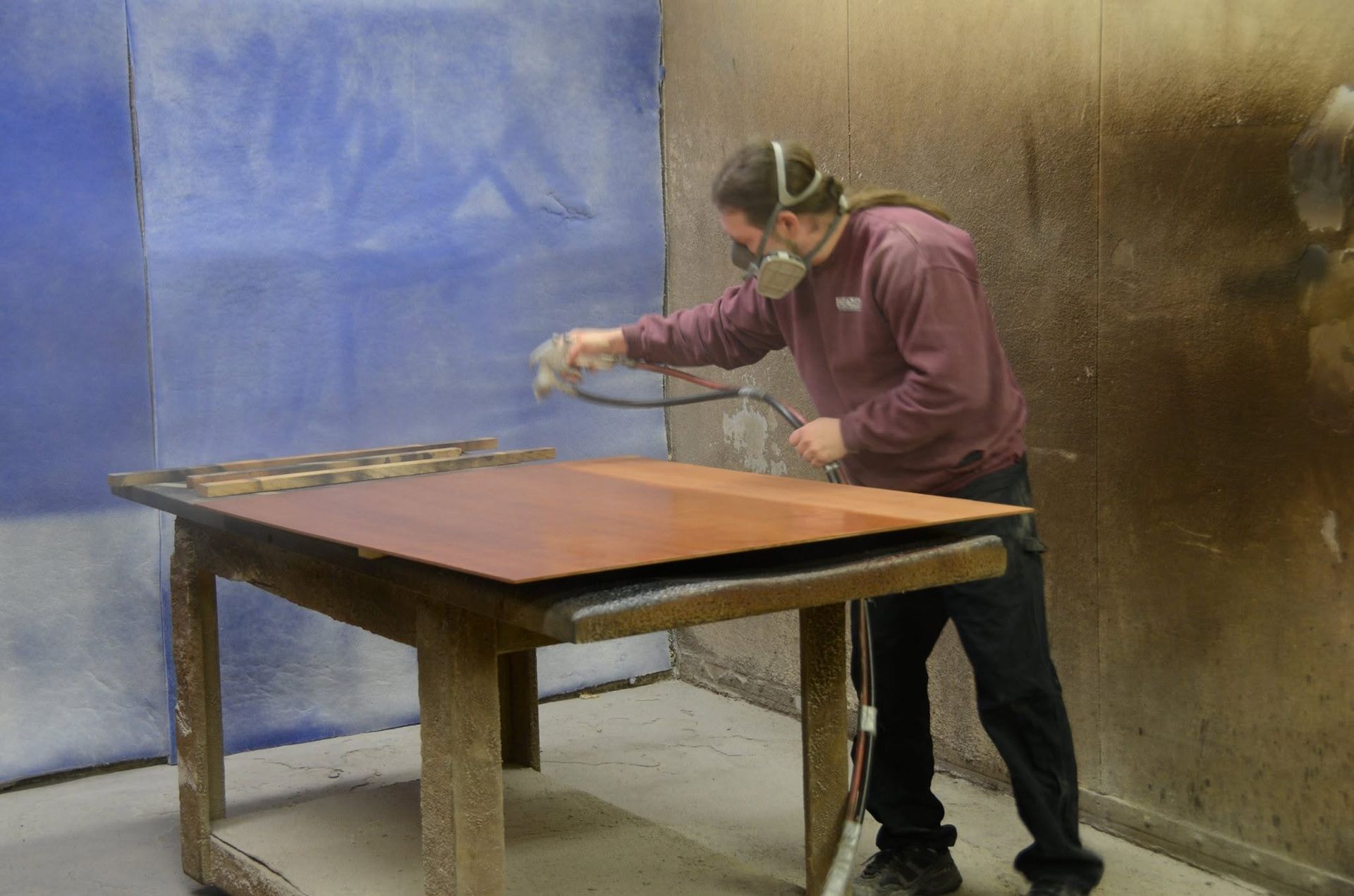
The Difference Between Surface Finish and Lasting Work
Finishing preparation involves checking wood moisture content with a meter to confirm the substrate has acclimated to interior conditions before any stain or topcoat is applied, because wood that is too dry or too humid will not accept finish evenly and will move after curing. Sanding follows a grit progression that closes wood fibers and creates a smooth substrate, and color matching requires testing stain formulations on sample pieces under actual home lighting rather than assuming showroom conditions will replicate real-world appearance. These steps determine whether the finish bonds correctly and holds up when Iowa's humidity shifts between seasons.
Once finishing work is complete, the wood surface accepts stain uniformly without blotching, the topcoat bonds to the substrate without bubbling, and the color matches existing adjacent trim under the home's lighting conditions. You see consistent sheen and color across all finished surfaces, with no visible lap marks, brush strokes, or uneven stain absorption that indicate rushed or improper application. The finish remains intact through humidity cycles rather than cracking or peeling when seasonal conditions change.
Finishing services focus on wood substrate preparation and finish application for interior trim, built-ins, and cabinetry, and do not extend to exterior wood finishing or structural carpentry work. The scope includes color matching to existing finishes when homeowners need new work to blend with adjacent original surfaces, but matching requires sample pulls from the actual piece and testing under real lighting conditions rather than visual estimation.
Answers to Frequent Service Questions
Homeowners in Marion often ask about the color matching process and what preparation is required before finishing work begins on wood trim and interior details.
How do you match stain color to existing wood trim that was finished years ago?
Color matching requires pulling a small sample from the existing trim piece and testing stain formulations under the home's actual lighting conditions, because stain color appears different under showroom lights than in real-world settings. Wood species, age, and previous finish affect how the wood accepts new stain, so samples are tested on the same wood type used in the original trim.
Why does wood moisture content matter before applying finish in Marion homes?
Iowa experiences significant humidity variation between dry winter indoor conditions and humid summer air, which causes wood to expand and contract throughout the year. Finishes applied to wood that has not acclimated to interior moisture levels crack or peel when the wood moves, which is why moisture content is verified before any stain or topcoat is applied.
What preparation steps are required before staining wood trim or cabinets?
Preparation includes sanding through a grit progression to close wood fibers and create a smooth substrate, verifying wood moisture content to confirm the piece has acclimated to interior conditions, and cleaning the surface to remove dust and contaminants that would interfere with finish adhesion. Skipping any of these steps results in uneven stain absorption or finish failure when humidity changes.
Can you apply finish to wood trim in older Marion homes without removing the existing finish first?
Existing finish must be removed or abraded adequately for new finish to bond correctly, because topcoats applied over incompatible or deteriorated finishes delaminate when stress occurs. The prep approach depends on the existing finish type and condition, with some finishes requiring complete removal while others can be abraded and overcoated.
What types of topcoat are used for interior wood finishing and how do they differ?
Topcoat selection depends on the wood species, stain type, and expected wear conditions, with options including polyurethane, lacquer, and conversion varnish that vary in durability, application method, and curing time. The appropriate topcoat is selected based on project requirements and homeowner preferences during the planning process.
Dudak Custom Kitchens handles finishing work for homeowners who need color-matched results and finishes that withstand Iowa's climate variation rather than surface-level work that fails within a season. Arrange an on-site consultation to review your wood finishing requirements and discuss prep and color matching approaches suited to your project.